
Scholarship Exams Explained: A Calm Parent's Guide to the Months Ahead
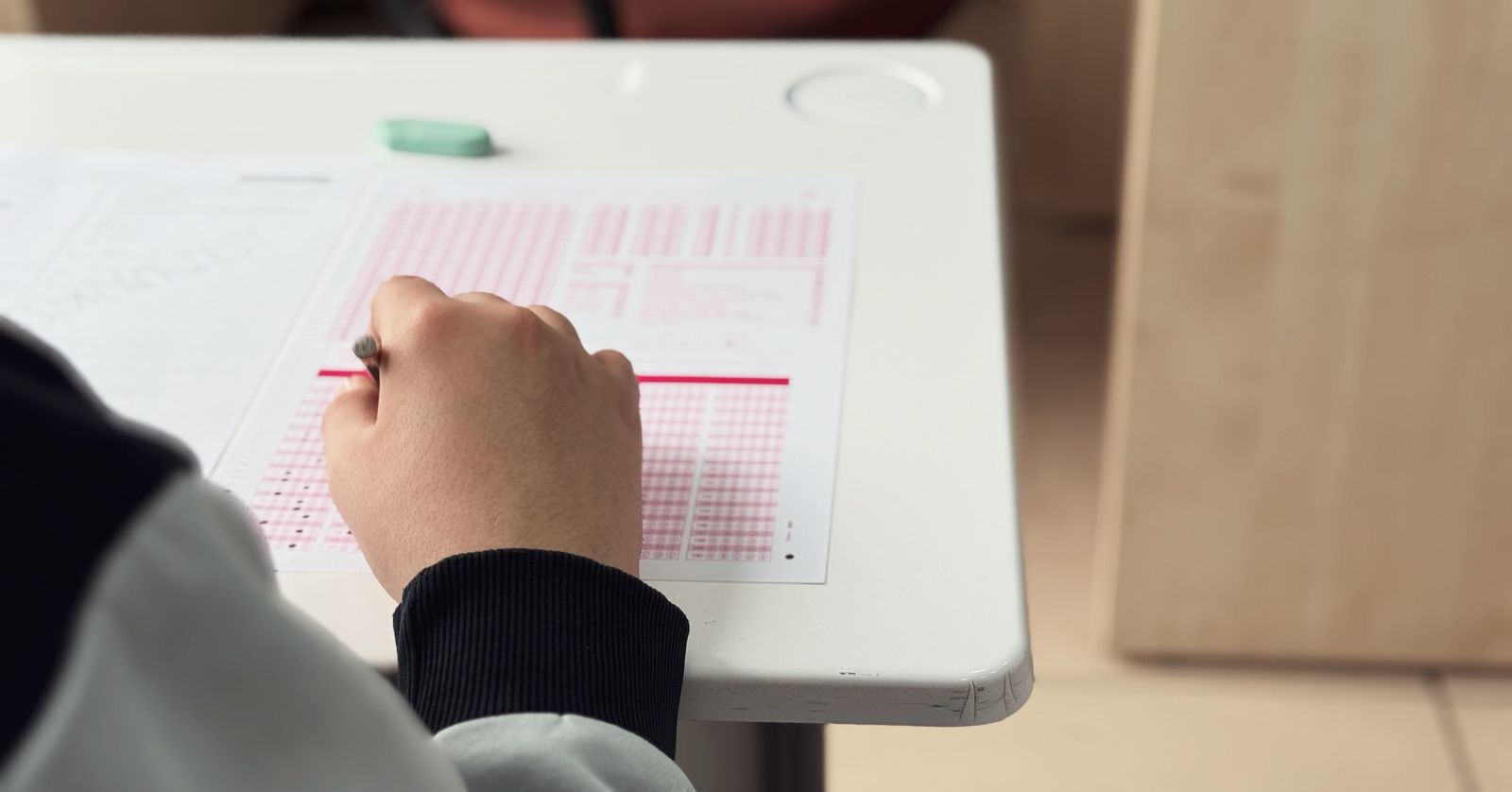
Somewhere in the school newsletter this term there is a line about scholarship applications, and it sits in the back of your mind for a fortnight. Should we? Could she? What if he sits it and it goes badly? Here is the calm version — what a scholarship exam actually is, when it all happens, and what genuinely helps between now and February.
What a scholarship exam actually is
Most independent schools in Australia set aside a small number of places each year for students who arrive with a fee reduction attached. Some of those are for music, sport or all-round contribution. The academic ones are almost always decided by a single sit-down test.
The most common route is the Cooperative Scholarship Testing Program run by ACER. Your child sits one test on one morning, and the results are reported to the schools you nominate — up to six of them. A number of schools sit outside that program and run their own paper, or use a different provider such as Edutest. The practical implication is simple: before you plan anything, check the scholarship page of the specific schools you care about, because the route, the date and the year levels are set by each school rather than by a single national rule.
The important thing to understand about the paper itself is that it is not a curriculum test. It does not check whether your child learnt what their class covered last term. It is a competitive test, built to spread out a group of already-capable children, and it is marked against every other candidate rather than against a pass mark.
How the year actually runs
The broad shape rarely changes. Registrations for the main co-operative sitting usually open around the end of September and close in early February, with the test itself held in late February. Offers follow over the months after that, for entry at the start of the following year. Year 7 entry is by far the most common, with separate levels for Year 9 and Year 11, and a handful of schools testing for Year 5.
Dates, fees and the list of participating schools do shift from year to year, so treat those as a shape rather than a diary entry, and confirm the specifics on each school's own page before you commit to anything.
What that shape means for you right now is more encouraging than most parents expect. If you are reading this in September, you have roughly five months. That is a long time for a primary-aged child. It is enough that nothing needs to be rushed, and enough that a small, steady approach will comfortably out-perform a frantic one in January.
What's actually on the paper
The exact mix depends on the level and the provider, but a scholarship test almost always covers written expression, reading comprehension and mathematics, and often adds a section of abstract or general reasoning. Most of it is multiple choice. One part of it — the writing — is not.
Two features tend to surprise families the first time around.
The first is that the paper is designed so that very few children finish comfortably. Running out of time is not a sign that something has gone wrong; it is the intended experience, and children who have not been told this can read it as failure halfway through and lose the rest of the paper.
The second is the standard of the field. Everyone in that room has been sent there by a parent who thinks they have a chance. A child who is comfortably top of their class can sit a scholarship paper and find themselves in the middle of the group, and that is worth saying out loud beforehand rather than discovering on the day.
Four things worth doing before February
1. Start with one honest practice paper
Sit a full paper under proper time early, before any preparation at all. Not to get a score — to get a map. You will learn more from one timed paper than from a month of guessing, and you will usually find the picture is uneven rather than uniformly weak: strong reading, shaky timing, or comfortable maths with a writing section that never got finished. Once you can see that, everything you do afterwards has a target. A hard paper is genuinely good for a child's brain, provided the result is treated as information rather than a verdict.
2. Protect the writing task
Written expression is the section most families neglect and the one that separates candidates most sharply, because it is the only part a child cannot get right by elimination. It is also the slowest thing to improve, which is exactly why starting in September rather than January matters.
Twenty to thirty minutes, once a week, on a prompt they have not seen, with a timer running. Then read it together and pick one thing — just one — to do differently next time. A child who has written a dozen pieces under time walks into that section knowing what the first five minutes feel like. A child who has written none is inventing a process while the clock runs.
3. Practise the clock, not just the content
A great deal of the score comes down to a skill nobody teaches at school: deciding when to leave a question. Children default to stubbornness, and one hard question can quietly eat four easy marks further down the page.
The habit worth building is two passes. Go through once, answer everything that comes quickly, mark anything that stalls and move on without argument. Then come back with whatever time is left. It feels wrong to a conscientious child the first few times, so it needs practising well before the day rather than being explained in the car park.
4. Keep it small and regular
Two or three short sessions a week, held lightly, will beat a heavy weekend block every time — and they survive contact with real life, which the heavy block does not. Be realistic about the calendar, too. Term 4 is already full of assessments, concerts and reports, so the honest preparation window is a modest amount now and a steadier run over the summer holidays. If your child is also pointing at the Selective test, the OC test or NAPLAN, it is worth reading how to balance preparation across several tests without burning out before you build the timetable.
The conversation to have first
Before any of the practical work, it is worth being clear with yourself about whose idea this is. There is nothing wrong with it being yours. But how it is introduced changes what the test becomes.
If a child hears we really need you to get this, the exam turns into a verdict on whether they are clever enough for the family, and they carry that into the room. If they hear there's a test in February that might open a door at this school — want to have a look at what's on it?, it stays a door. Same test, entirely different weight.
If money is part of the reason, say so plainly. Children generally cope well with a straight answer and very poorly with a vague sense that something enormous is riding on them that nobody will name.
What a realistic outcome looks like
Scholarship places are scarce. A school may offer only a small number in a given year and receive many times that in applicants, most of them capable and most of them prepared. A strong child can do everything right and still not be offered one, and this is worth knowing in September rather than in April.
Which is why the preparation itself has to be the return. Writing to a timer, reading a passage closely under pressure, judging when to move on — none of that is scholarship-specific. It carries into the Selective and OC tests, into high school assessments, and into every timed task your child will ever face. Framed that way, the five months are worth spending regardless of what the letter says, and the point about focusing on effort rather than the score stops being a consolation prize and starts being the actual plan.
So put the registration date in the calendar, sit one honest paper this month, and then let it be a quiet background project rather than the thing your household is about. The families who come through this well are rarely the ones who started earliest or pushed hardest. They are the ones who kept it in proportion — who let their child walk into that room in February curious rather than terrified, and who had already decided, well in advance, that the result would not change a single thing about how the child was seen at home.
Which schools near you actually run one is the first practical question, and our Primary Scholarship page has a school finder that answers it by state, with the closing dates. If you are weighing this up alongside other tests, here is how to balance preparation without burning out.
Put it into practice
Start with the Free Test, then choose a plan for the full practice papers. Cancel anytime.
Start Free Test