
How Boys’ Brains Develop Differently — and What It Means for Academic Test Preparation
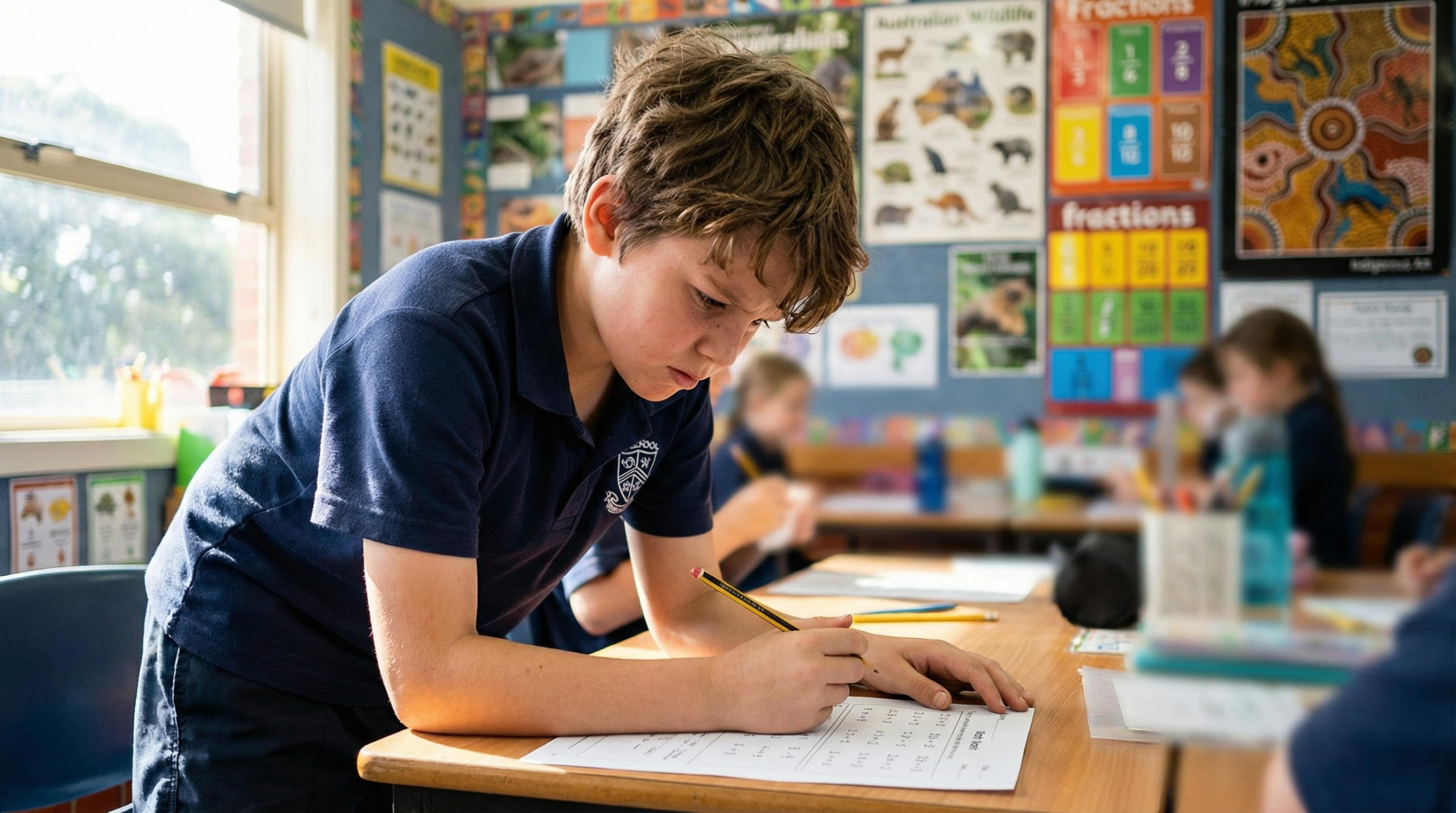
Your son seems a step behind his classmates - shorter attention span, messier handwriting, less verbal fluency - and it is hard not to worry he is falling behind. Often he is not; he is simply developing on a different timeline. Drawing on Steve Biddulph's work, this article explains that boys' brains typically mature six to twelve months later than girls' of the same age. Once you understand that, you can adjust expectations and study routines in a way that reduces stress for you both and genuinely helps with NAPLAN, Selective and OC test preparation.
The Six to Twelve-Month Developmental Delay
Steve Biddulph’s research reveals that boys’ brains typically develop six to twelve months later than girls’ brains of the same age. This delay is most noticeable in early primary school but can continue into the years when boys start preparing for the OC and Selective Tests.
Because of this, expecting boys to match girls in attention span, fine motor skills, or verbal fluency at the same age can lead to frustration. Adjusting expectations and study routines to accommodate this natural lag helps reduce stress for both parents and boys.
Differences in Brain Hemisphere Connectivity
Boys generally have less developed connections between the left and right brain hemispheres, known as the corpus callosum. While girls often engage both hemispheres simultaneously, boys tend to use one side at a time.
This compartmentalised brain activity can make multitasking and switching between different types of tasks—like reading comprehension and mathematical reasoning—more challenging for boys. Targeted practice can help improve these cognitive transitions.
Language and Communication Challenges
Due to hemispheric differences, boys often find language and communication skills more difficult early on. Their verbal expression and reading comprehension may lag behind peers, impacting performance in NAPLAN reading and writing sections.
To support language development, parents should:
- Engage in frequent conversations and storytelling
- Read aloud regularly
- Break reading passages into smaller, manageable sections during study
Developing Fine Motor Skills and Writing Ability
Boys’ fine motor skills tend to develop later, affecting handwriting and their ability to write quickly under timed conditions, such as in the Selective Test writing section.
Parents can help by encouraging activities that strengthen fine motor skills, including:
- Building models
- Drawing or colouring
- Allowing boys to type practice essays initially to focus on content without writing fatigue
Incorporating Hands-On and Physical Learning
Boys often learn best through movement and hands-on experiences rather than sitting still for long periods. Traditional study methods that require extended desk time may not suit their natural learning style.
Effective strategies include:
- Pacing while reciting facts like times tables
- Using physical objects to solve maths problems
- Taking frequent active breaks during practice tests
Conclusion
Understanding the unique ways boys’ brains develop, as outlined in Steve Biddulph’s Raising Boys, allows parents to tailor academic preparation to suit their sons’ needs. Recognising these differences helps reduce frustration and supports more effective learning.
At TestMagic, we offer online practice tests designed to adapt to various learning styles. Combine our resources with these insights to create a study plan that works with your son’s brain, boosting confidence and performance in the Selective Test, OC test, and NAPLAN.
Ready to help your son succeed? Start practising today with TestMagic’s online practice tests and give him the tailored support he needs to excel.
Development explains a lot, but the paper still arrives on a set date. Our Selective and OC practice papers can be worked in short sittings rather than long ones. See also the three stages of a boy’s development and why sport is not optional.
Put it into practice
Start with the Free Test, then choose a plan for the full practice papers. Cancel anytime.
Start Free Test